I started in nephrology, inside the hospital.
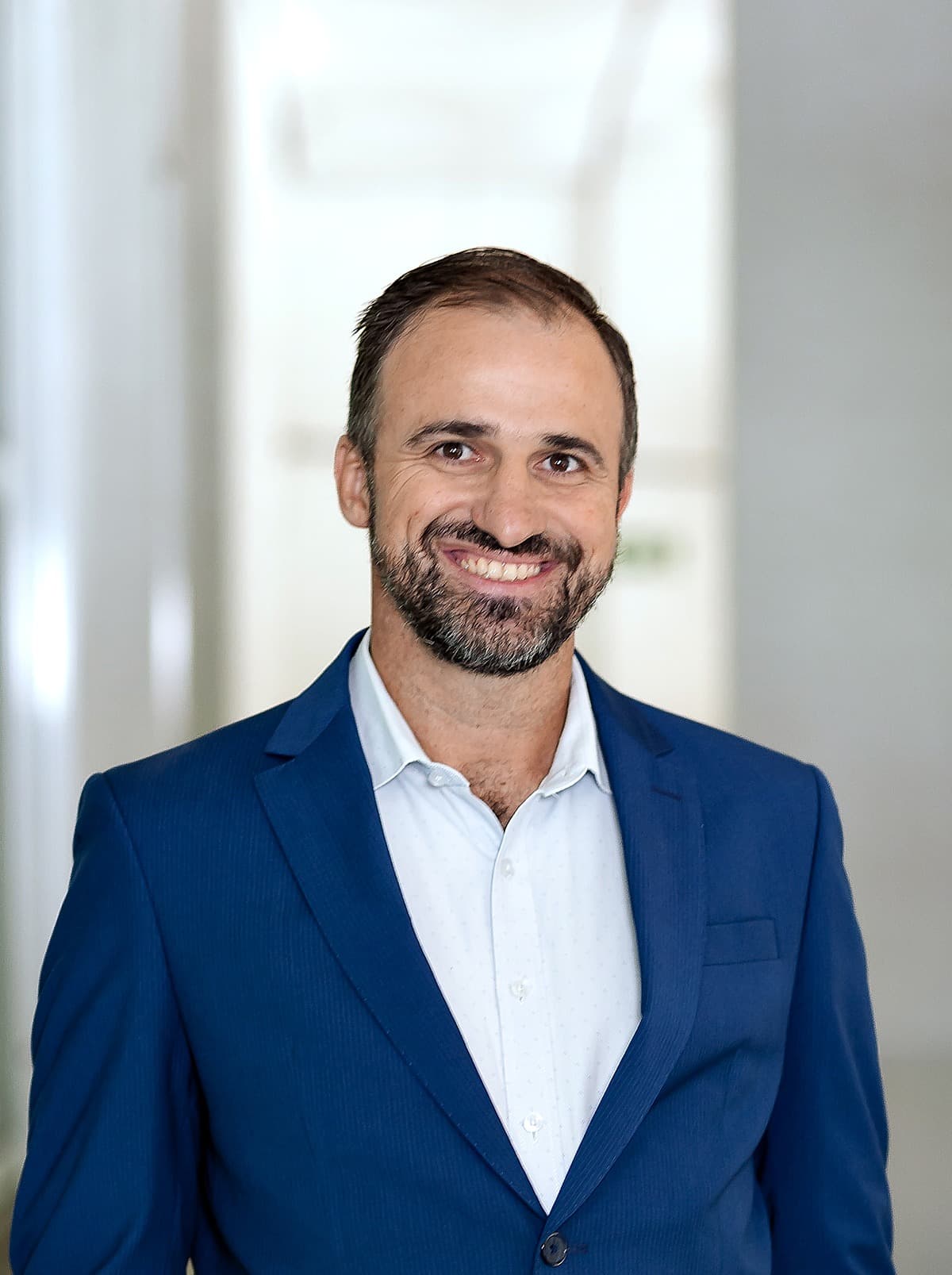
I'm from Londrina. I graduated in medicine from Universidade Estadual de Londrina in 2004 and trained in internal medicine and nephrology at Santa Casa de Londrina, where I also obtained the specialist certification from the Brazilian Society of Nephrology in 2008.
In those years, I learned medicine inside the hospital — where renal and cardiovascular disease shows up at advanced stages, with little room to change the course.
For the next two decades, that was my daily practice. Since 2009 I coordinate the nephrology medical residency at Santa Casa de Londrina, and in 2014 I founded the internal medicine residency at the same institution. I serve as technical director for in-hospital hemodialysis at DaVita Intra Hospitalar de Londrina. I followed hundreds of patients in advanced stages — cases where, often, the trajectory could have been altered years earlier.
I saw patients arrive at the clinic with "normal" exams from the previous year. I saw check-ups that recorded everything within range — and missed the signal of everything that was silently building. The lab said "normal." The body had been getting sick for eight, ten, twenty years.
It was that repeated observation that bothered me. It wasn't a failure of the tests — it was a failure of the question. The conventional check-up looks for established disease. It doesn't look for the interval between normal and optimal, where longevity is built or lost.
In 2026, I completed postgraduate training in integrative functional medicine through the Brazilian Academy of Integrative Functional Medicine. It wasn't a paradigm shift. It was an extension backwards — applying the structured clinical method developed over twenty years of practice, with labs and data and clinical decision-making, to the period that precedes disease.
That's the medicine I practice today at Plenya, alongside the team assembled for it. And it's about that silent window between normal and optimal that I wrote the book Antes, published in 2026.
I continue practicing clinical nephrology at Nefroclínica Londrina, coordinating the residency at Santa Casa, serving as technical director for in-hospital hemodialysis, and leading Plenya as clinical director. The four roles are the same medicine, at different moments in a person's timeline.
At Plenya in particular, I lead the work as the patient's care-managing physician — the clinician who knows the history in depth, follows care longitudinally over months and years, and articulates the plan between the Plenya team and the professionals already caring for that patient elsewhere — cardiologist, endocrinologist, gynecologist. I don't replace those relationships: I ensure clinical continuity across the whole, with someone finally looking at the entire person.
Lives in Londrina with his family. Runs when the day allows.
About the physician, the practice, and how to consult.
Where does Dr. Getúlio practice?
I practice in Londrina/PR across three fronts:
Outpatient consultation: Plenya (integrative functional medicine, preventive medicine and longevity — Av. Ayrton Senna da Silva, 500, Torre Pietra Building, suite 1402, Gleba Palhano) and Nefroclínica Londrina (clinical nephrology, main kidney diseases and kidney transplant — Av. Duque de Caxias, 1371, Jardim Petrópolis).
Hospital nephrology care: inpatient consultations and follow-up at Santa Casa de Londrina (Rua Espírito Santo, 523 — Centro), Hospital Araucária (Rua Campo Grande, 211 — Jardim Colina Verde) and Hospital Unimed Londrina (Av. dos Expedicionários, 750 — south zone, near Jardim Botânico).
Hemodialysis: technical director of DaVita Intra Hospitalar Londrina (in-hospital hemodialysis) and attending nephrologist at DaVita Londrina (outpatient hemodialysis and peritoneal dialysis — Av. Duque de Caxias, 1371).
What is Dr. Getúlio's medical specialty?
I am a nephrologist and internal medicine physician. I graduated in medicine from Universidade Estadual de Londrina (UEL) in 2004, completed specialty training in internal medicine (2006) and nephrology (2008) at Santa Casa de Londrina, with specialist certification in nephrology from the Brazilian Society of Nephrology (SBN) in the same year. In 2026, I completed postgraduate training in integrative functional medicine through the Brazilian Academy of Integrative Functional Medicine (ABMFI).
I have coordinated the nephrology medical residency at Santa Casa de Londrina since 2009, and founded the internal medicine residency at the same institution in 2014. I am a member of the Cardiorenal Committee of the SBN.
Areas of interest and clinical practice: preventive nephrology, cardiorenal-metabolic axis, longevity and healthspan, preventive and integrative functional medicine, performance, nutrology, evidence-based supplementation, advanced biomarkers and metabolic management.
Registries: CRM-PR 21,876 · RQE 16,038 (Nephrology).
Do you treat patients with chronic kidney disease?
Yes — it is the focus of consultations at Nefroclínica. I treat adults (18+) at all stages of chronic kidney disease (1 to 5), treatment-resistant hypertension, electrolyte disorders, glomerular diseases, diabetic kidney disease and medication adjustment for reduced kidney function.
For kidney transplant, I follow both the pre-transplant phase (assessment, preparation and listing) and the post-transplant phase (outpatient follow-up, immunosuppressant adjustment and prevention of complications).
I continue to follow my patients when they enter renal replacement therapy — hemodialysis (I attend at DaVita Londrina, and serve as technical director of DaVita Intra Hospitalar Londrina) and peritoneal dialysis — maintaining the clinical continuity of care.
Do you practice preventive medicine and longevity?
Yes — it is the focus of my work at Plenya. I conduct an expanded health assessment with integrated clinical reading (cardiometabolic, renal, hormonal, body composition) and a longitudinal plan under The ACTS Method (Activity, Alimentation & Smart Adjuncts · Clinical Optimization · Tending Mind, Body & Bonds · Sleep, Rhythm & Recovery; known in Portuguese as método AGIR), executed by a multidisciplinary team — physician, nutritionist, psychologist and exercise physiologist — working the same patient under the same plan.
Areas of emphasis: nutrology, evidence-based intelligent supplementation, performance (strength training, zone 2, VO₂ max, body composition), reading of advanced cardiovascular and metabolic biomarkers, and metabolic management (pre-diabetes, insulin resistance, metabolic syndrome).
The focus is to act in the silent window between normal and optimal — where disease builds in silence, with "normal" lab results, for 10 to 20 years before showing up in the office as a diagnosis. Central theme of my book BEFORE — The silent window between normal and optimal — a decade where health is decided (2026).
Do you coordinate medical residency?
Yes. I have coordinated the nephrology medical residency at Santa Casa de Londrina (ISCAL) since 2009 — a program accredited by CNRM/MEC, integrating clinical training, in-hospital hemodialysis and supervision of inpatient consultations.
In 2014, I founded the internal medicine residency at the same institution.
Between 2013 and 2014, I was professor of Semiology and Introduction to Medical Practice in the medicine course at PUC Londrina, and mentor of the Semiology Academic League.
How do I book a consultation?
For Plenya (preventive medicine, longevity, performance, nutrology — in person in Londrina or online via telemedicine): via WhatsApp +55 43 99974-8899, via the website plenyasaude.com.br or Instagram @plenyaSaude.
For Nefroclínica Londrina (clinical nephrology, kidney transplant, hemodialysis and peritoneal dialysis): WhatsApp +55 43 99638-0044 or via the website nefroclinica.com.
Full details on each pathway and address on the How to consult page.
Do you see patients outside Londrina?
Yes. Plenya consultations can be done via telemedicine with the same clinical depth — attending patients in any city in Brazil or Brazilians living abroad. Consultations follow CFM Resolution No. 2,314/2022, which regulates telemedicine in Brazil.
When needed, a digital prescription with certified electronic signature (ICP-Brasil) is issued, valid in Brazilian pharmacies. For patients abroad, please note that Brazilian prescriptions may not be accepted in pharmacies of other countries.
For Nefroclínica, care is in-person in Londrina. Patients from other cities typically come for the first assessment in person and, when the condition allows, maintain follow-up online.
The Continuum Plenya program is 100% online — all weekly meetings with the multidisciplinary team (physician, nutritionist, psychologist, exercise physiologist) take place via video call, regardless of where the patient is.